

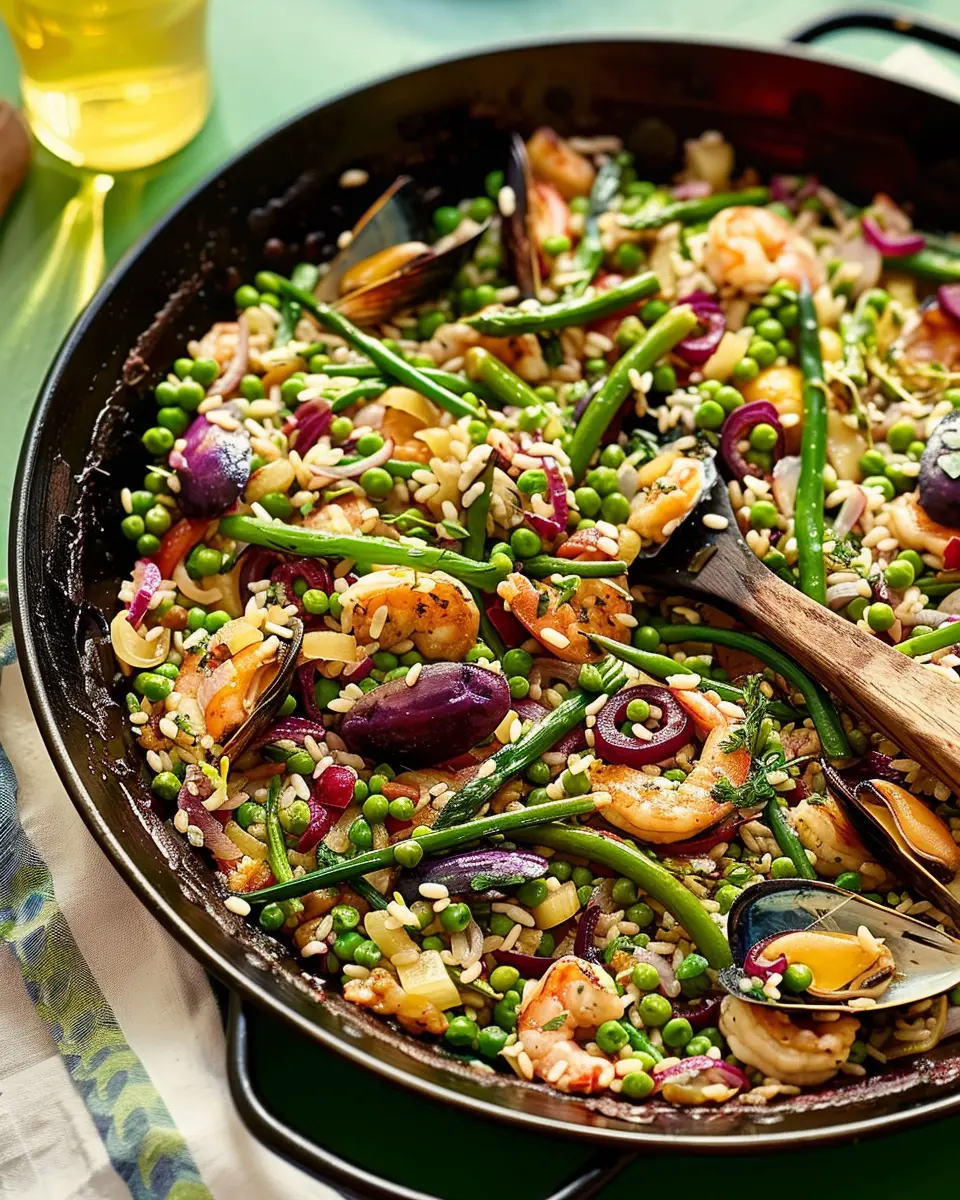
Introduction to Spring Vegetable Paella
Spring is a season that brings with it a burst of color, freshness, and simply delightful flavors. The allure of spring vegetables in homestyle cooking lies in their brightness and vibrancy, a refreshing departure from the heavier root vegetables of winter. Picture tender asparagus, sweet peas, and roasted bell peppers adding depth and dimension to your meals. If you’re looking to bring a little sunshine into your kitchen, a spring vegetable paella is a fantastic choice.
The Beauty of Spring Vegetables in Homestyle Cooking
Spring vegetables are at their peak when they’re full of nutrients and flavor, making them perfect for dishes like paella. This traditional Spanish dish typically features a comforting combination of saffron-infused rice and various proteins; however, if you’re leaning toward a vegetarian or lighter option, incorporating fresh spring veggies does wonders. Imagine combining fava beans, artichokes, and fresh herbs to create a vibrant medley that sings flavor and nutrition.
Why choose spring vegetables? For one, they are packed with vitamins and antioxidants that can enhance your health. A recent study highlighted that consuming fresh produce can significantly boost your immune system and overall well-being. So why not indulge while taking care of yourself?
One of the best things about a spring vegetable paella is its versatility. You can mix and match your vegetables based on what’s available at your local farmers’ market. Use seasonal ingredients not just for great taste but also for sustainability—supporting local farmers means you’re eating the freshest produce around.
Are you wondering how to elevate your cooking skills while impressing your friends? A homemade paella allows for creativity and culinary exploration. Dusting off your pan to prepare this dish can turn an ordinary gathering into a memorable feast with minimal effort.
Incorporate some local vegetable sources into your next grocery run. As the weather warms up, think about visiting a farmers’ market for fresh ingredients. Not only will you get fresher produce, but you’ll also enjoy the vibrant community atmosphere.
So, roll up your sleeves, and let’s dive deeper into creating a delicious spring vegetable paella that brings together the essence of the season and your culinary flair.
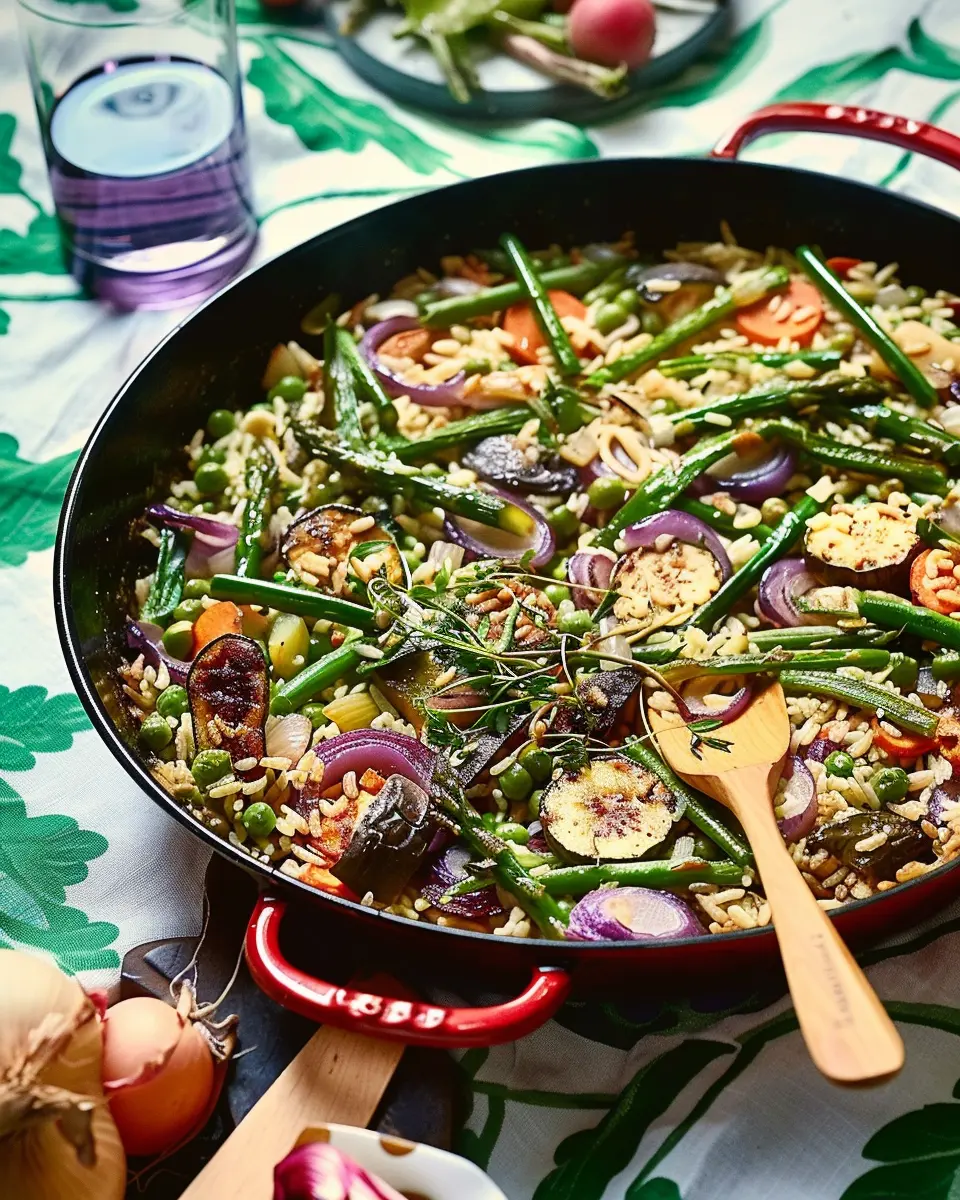
Ingredients for Spring Vegetable Paella
Fresh ingredients for vibrant flavor
Crafting a delicious spring vegetable paella is all about using fresh, seasonal produce that bursts with flavor. Here’s what you’ll want to gather for this delightful dish:
- Arborio rice: This short-grain rice absorbs flavors beautifully, making it perfect for paella.
- Vegetable broth: A rich vegetable broth forms the flavorful base—a must for enhancing the dish.
- Asparagus: Tender and mildly sweet, asparagus adds a lovely crunch.
- Peas: Fresh or frozen, these vibrant green gems bring sweetness and color.
- Bell peppers: A mix of red, yellow, and green peppers adds sweetness and visual appeal.
- Zucchini: Sliced thin, zucchini contributes to the dish’s freshness and lightness.
- Artichoke hearts: These lend a unique taste and a touch of elegance to your paella.
- Garlic and onion: The aromatic pair that builds a savory foundation for this meal.
For the most flavor-packed paella, visit Farmers’ Markets for the freshest ingredients. Your taste buds will thank you!
Preparing Spring Vegetable Paella
Spring is the perfect time to embrace the fresh flavors that come with the season, and what better way to celebrate than with a vibrant spring vegetable paella? This dish not only showcases the best of what spring has to offer but also allows for creativity in the kitchen. Ready to dive in? Let’s get started!
Gather your ingredients
Before we start cooking, it’s essential to gather all the ingredients you’ll need. A well-prepared kitchen makes for a smooth cooking experience. Here’s what you’ll need:
- Rice: Short-grain or bomba is best for paella.
- Produce: Asparagus, bell peppers, peas, and artichokes are fantastic choices.
- Proteins: Turkey bacon and chicken ham will add depth and flavor without being overwhelming.
- Aromatics: Onions and garlic are key to building the base of your paella.
- Stock: Vegetable stock works well, offering a rich flavor profile.
- Seasonings: Saffron for that signature color and fragrance, along with smoked paprika, salt, and pepper.
- Preserved lemon: An oft-overlooked ingredient that can elevate your dish.
Make sure to prep everything beforehand. Chop up your veggies and proteins, as having everything ready to go will keep the cooking process flowing seamlessly.
Cook the sausage, onions, and mushrooms
To kick things off, heat a large oven-safe skillet or paella pan over medium heat and add a dash of olive oil. Once hot, toss in the diced turkey bacon and let it render its fat—this is where the flavor begins to build.
Next, add finely chopped onions and sauté until they’re translucent and aromatic. Then, stir in sliced mushrooms, which not only add a hearty texture but also absorb all those lovely flavors. If you have a moment, consider enhancing the flavor further by incorporating fresh herbs like thyme or rosemary; a little bit goes a long way!
Add in the seasoned rice
Now it’s time for the star of the show: the rice. Pour it in and mix it thoroughly with the sautéed ingredients, ensuring every grain is coated. This step is crucial as it allows the rice to absorb the rich flavors as it cooks.
Sprinkle in your saffron and smoked paprika at this stage to achieve that vibrant color and distinctive taste. It’s fascinating to note that saffron, while a bit pricey, is derived from the flower of Crocus sativus. Its exotic essence can transform a simple dish into something spectacular.
Stir in the stock and preserved lemon
Once your rice looks well-integrated with the other ingredients, it’s time to pour in the vegetable stock. The ratio should be around 3 cups of stock for every cup of rice.
Don’t forget to add in diced preserved lemon at this point. It may seem unexpected, but it’ll introduce a tangy, citrusy kick that complements the earthiness of the dish beautifully.
Bake the paella with spring veggies
Stir everything gently to avoid disturbing the rice too much, and bring it to a gentle simmer. Once it’s bubbling, sprinkle in your spring vegetables—think vibrant asparagus and peas—and then transfer the pan to a preheated oven at 400°F (200°C). Bake for around 20-25 minutes until the rice is tender and the liquid has been absorbed.
Create the socarrat for that perfect crunch
One of the hallmarks of a successful spring vegetable paella is the socarrat, the crispy layer of rice at the bottom of the pan. To achieve this, increase the oven temperature to 425°F (220°C) for the last 5-10 minutes of baking, keeping a close eye to prevent burning. When properly cooked, you should hear a subtle crackling sound; this is your cue to celebrate!
Once done, let the paella rest for a few minutes before serving. Decorate with fresh herbs, and enjoy the joy of sharing a gloriously colorful dish that’s a testament to the flavors of spring.
For tips on the best equipment for paella cooking, check out this paella pan guide that helps ensure your dish turns out perfect every time!
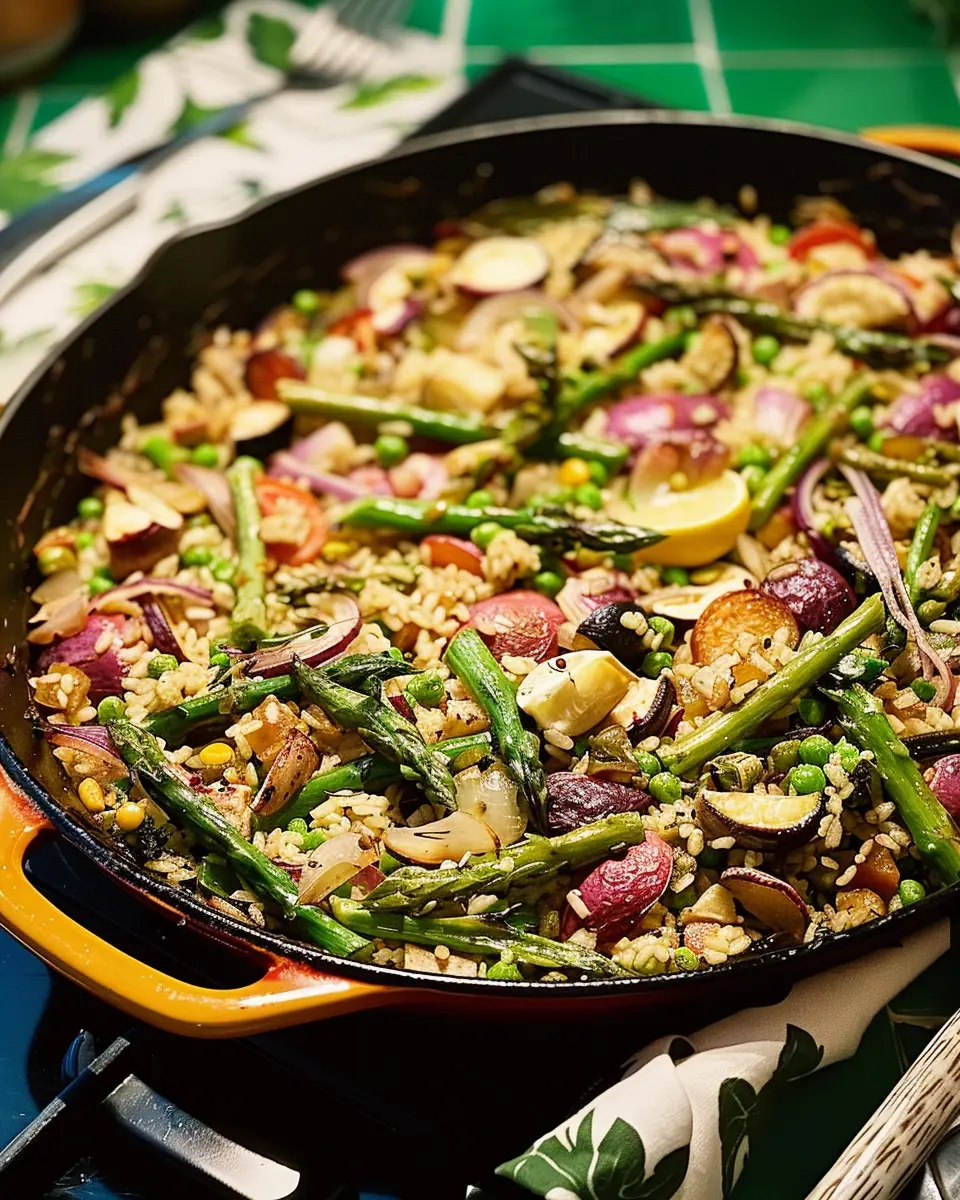
Variations on Spring Vegetable Paella
Embrace the Vegetarian Spring Vegetable Paella
If you’re leaning towards a lighter cuisine, a vegetarian spring vegetable paella is your ticket! By focusing on fresh, vibrant produce, you can create a delightful dish that bursts with flavor and color. Consider using seasonal veggies like asparagus, peas, and bell peppers. For added texture, toss in artichoke hearts or zucchini.
To elevate the umami flavor without meat, sauté a mix of garlic, onion, and ripe tomatoes. Don’t forget the saffron; it’s the heart of traditional paella, giving that distinct golden hue and aromatic notes. Plus, with plant-based stock instead of broth, every bite becomes a celebration of spring!
For a delightful twist, sprinkle some feta cheese on top for creaminess, or toss in some chickpeas for an extra protein punch. Every forkful will remind you that comfort can also be nutritious.
Paella with a Protein Punch
For those who crave a heartier meal, adding proteins like chicken or shrimp transforms the spring vegetable paella into a robust main course. Think about marinating chicken thighs in lemon juice and garlic for a flavor boost. Grilled or pan-seared, they make a perfect companion to the vegetables.
If seafood is your preference, shrimp is an excellent choice. Cook until pink and tender but don’t overdo it! Balance the dish with a sprinkle of fresh herbs like parsley or cilantro for a refreshing finish.
Whether you choose to keep it plant-based or add protein, paella adapts to your palate, ensuring everyone at the table leaves satisfied. Consider making it a centerpiece for gatherings with friends or a meal prep option for your busy week ahead.
For more tips and variations, check out this guide to perfect paella. Happy cooking!
Cooking Tips and Notes for Spring Vegetable Paella
Choosing the Right Pan for Authentic Texture
When making spring vegetable paella, the pan you choose can make all the difference! A wide, shallow pan, such as a traditional paella pan, allows for even heat distribution and creates that coveted socarrat (the crispy bottom layer). If you don’t have one, a large skillet can do the trick. Just ensure it has a sturdy base to withstand high temperatures!
Substituting Ingredients Based on Availability
One of the best things about spring vegetable paella is its flexibility. If you can’t find a specific vegetable, don’t worry! Asparagus, peas, or bell peppers can easily be substituted with whatever spring veggies you have on hand—think zucchini or even spinach. If you’re missing protein, replacing chicken ham with a plant-based option or your favorite beans works wonders too. For more tips on ingredient substitutions, check out this article on cooking swaps.
In the end, cooking should be a joyful experience, so embrace creativity and seasonal produce to make your paella uniquely yours!
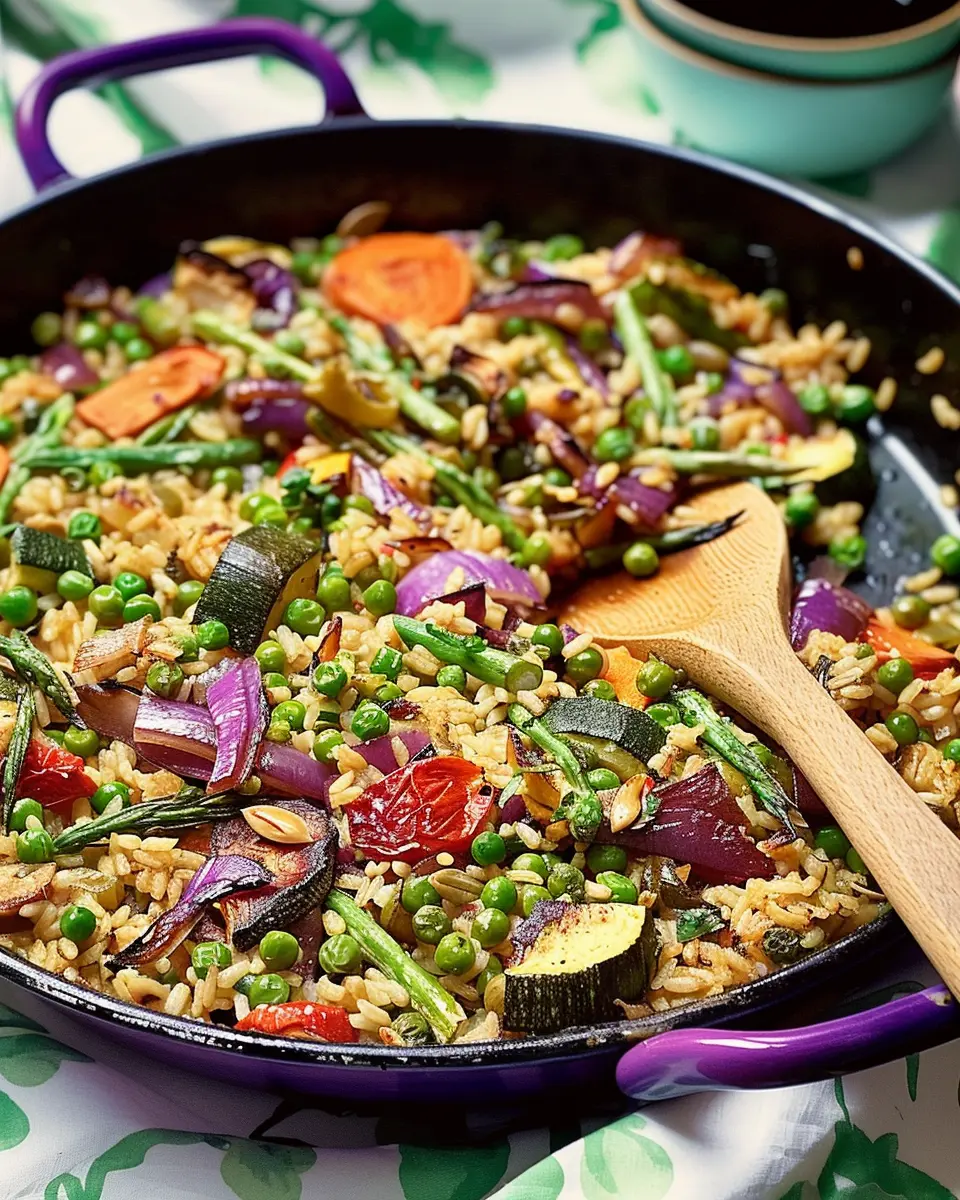
Serving suggestions for Spring Vegetable Paella
Ideal sides and spreads for a complete meal
When you’re enjoying a vibrant spring vegetable paella, it’s a good idea to think about what to serve alongside it for a well-rounded meal. Here are some delightful pairings to elevate your dining experience:
-
Fresh Green Salad: A simple arugula salad with lemon vinaigrette can add a zesty contrast to the rich flavors of your paella. Consider adding some sliced avocado or colorful radishes for extra crunch and nutrition.
-
Crusty Bread: An artisanal loaf or a soft baguette is perfect for mopping up the delicious saffron-infused rice. You can also spread a bit of hummus or a bean dip for a creamy twist.
-
Grilled Vegetables: Toss some seasonal veggies on the grill. Bell peppers and zucchini can enhance the grilled essence of your paella perfectly.
For something extra special, why not serve a garlic allioli or a tangy yogurt sauce on the side? These creamy dips can add depth and complement the vibrant flavors beautifully. With these suggestions, your meal will not just satisfy hunger but also delight the palate.
For more ideas on complementary dishes, check out resources from Serious Eats and BBC Good Food.
Time breakdown for Spring Vegetable Paella
Preparation time
Getting started on your spring vegetable paella should be a breeze! Set aside about 15-20 minutes to prep your ingredients. This includes chopping your fresh spring vegetables, measuring out your rice, and gathering all your spices. Having everything ready to go not only makes the cooking process smoother but also adds to the joy of crafting your dish.
Cooking time
Once your prep is complete, the cooking process will take around 30-35 minutes. You’ll sauté, simmer, and let those delightful flavors meld together. It’s such a rewarding experience to watch everything come together, filling your kitchen with mouth-watering aromas.
Total time
In total, you’re looking at approximately 50-55 minutes from start to finish. Isn’t that an appealing timeframe for a dish that’s packed with vibrant flavors and healthy ingredients? For an in-depth look at the health benefits of the veggies you’ll be using, check out this resource from Healthline.
With just under an hour, you’ll find yourself enjoying a delicious bowl of spring vegetable paella that’s perfect for any spring gathering!
Nutritional facts for Spring Vegetable Paella
Calories per serving
When savoring a delightful bowl of spring vegetable paella, you can expect approximately 350 calories per serving. This makes it a satisfying yet light meal, perfect for spring gatherings or cozy dinners at home.
Breakdown of key nutrients
This dish is not only delicious but also packed with nutrients! Here’s a quick breakdown:
- Protein: Approximately 10g per serving—thanks to the fresh vegetables and any additions like Turkey Bacon or Chicken Ham.
- Fiber: About 6g, which aids in digestion and helps keep you feeling full longer.
- Healthy fats: A modest 5g from olive oil, supporting heart health.
- Vitamins and minerals: Rich in vitamins A and C, potassium, and magnesium from seasonal veggies boost your overall wellness.
Using seasonal vegetables not only enhances flavor but also ensures you’re getting the freshest nutrients available. If you’re curious to learn more about healthy eating, check out Healthline for more insights!
Embrace the vibrant flavors and health benefits of this lovely dish; it’s a fantastic choice for your culinary adventures!
FAQs about Spring Vegetable Paella
Can paella be made ahead of time?
Absolutely! Spring vegetable paella is a fantastic dish to prepare in advance. You can make it a day ahead and store it in the refrigerator. Just remember to let it cool completely before covering it tightly with plastic wrap or transferring it to an airtight container. When you’re ready to enjoy it, reheat on the stovetop over low heat, stirring occasionally. This not only saves you time, but the flavors also deepen and improve overnight!
What is the secret to perfect socarrat?
Ah, the coveted socarrat—crispy, caramelized rice at the bottom of your paella. To achieve this delightful texture, follow these tips:
- Use the right pan: A wide, shallow paella pan allows for even cooking and maximum surface area for that socarrat.
- Temperature control: Start at a high heat for the first few minutes and then reduce it for even cooking. You can increase the heat briefly towards the end to create that crispy layer.
- Choose the right rice: Use short or medium-grain rice, such as Bomba or Arborio, which absorb flavors well without becoming mushy.
How do I store leftovers properly?
Storing spring vegetable paella is straightforward, but proper storage is key to keeping it fresh. Place leftovers in an airtight container and refrigerate them within two hours of cooking. It’s best to consume them within 3-4 days. If you know you won’t finish it, consider freezing portions. Just let it cool, then transfer it to freezer-safe bags or containers. It will keep well for about 2 months. When reheating, adding a splash of vegetable broth or water can help rehydrate the rice!
For more tips on effective meal prep, check out resources from EatRight.org or USDA.gov.
Conclusion on Spring Vegetable Paella
Celebrating spring with vibrant flavors in your kitchen
As we wrap up our exploration of spring vegetable paella, it’s clear that this dish embodies the essence of the season with its colorful array of fresh ingredients. Thinking about the textures and flavors of tender asparagus, bright peas, and fragrant herbs can get anyone excited about cooking.
Not only is spring vegetable paella a feast for the eyes, but it also nourishes your body and spirit. This recipe not only highlights seasonal produce but also brings people together around the table. So, gather your friends and family, grab some delicious sparkling water, and create a culinary masterpiece! For tips on selecting the best seasonal vegetables, check out resources from the USDA or local farmer’s markets. Happy cooking!
PrintSpring Vegetable Paella: Easy and Delicious Comfort Food Recipe
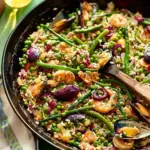
Enjoy the vibrant flavors of spring with this easy and delicious vegetable paella that’s perfect for a cozy meal.
- Prep Time: 15 minutes
- Cook Time: 30 minutes
- Total Time: 45 minutes
- Yield: 4 servings
- Category: Main Dish
- Method: Stovetop
- Cuisine: Spanish
- Diet: Vegetarian
Ingredients
- 1 cup Arborio rice
- 2 cups vegetable broth
- 1 cup green peas
- 1 cup bell peppers, chopped
- 1 cup asparagus, chopped
- 1 medium onion, diced
- 3 cloves garlic, minced
- 1 teaspoon smoked paprika
- 2 tablespoons olive oil
- Salt and pepper to taste
Instructions
- In a large pan, heat olive oil over medium heat. Add onions and garlic, cooking until softened.
- Add the Arborio rice, stirring to coat with oil.
- Pour in the vegetable broth and bring to a simmer.
- Add the bell peppers, asparagus, and green peas.
- Stir in smoked paprika, salt, and pepper.
- Cover and cook for 20 minutes until rice is tender.
- Fluff with a fork and let sit for a few minutes before serving.
Notes
- Feel free to add other seasonal vegetables as desired.
- This dish is best served fresh but can be reheated.
Nutrition
- Serving Size: 1 bowl
- Calories: 350
- Sugar: 3g
- Sodium: 500mg
- Fat: 10g
- Saturated Fat: 1g
- Unsaturated Fat: 8g
- Trans Fat: 0g
- Carbohydrates: 60g
- Fiber: 5g
- Protein: 9g
- Cholesterol: 0mg